Difficult Communication, A Revisit
Today we had a 4-hour session on How To Make Difficult and Productive Conversations, taught and facilitated by Bonnie and Nirit from Shelly Anderson & Lanz Lowen.
Confession of a Stanford Sloan Fellow Series EP07
Today we had a 4-hour session on How To Make Difficult and Productive Conversations, taught and facilitated by Bonnie and Nirit from Shelly Anderson & Lanz Lowen. The milage of this session varies depending on Sloans' background and level of experience. For me this is an opportunity to consolidate some of my reflections in this area after going through gruesome training in the best management trainee program in General Electric and grinding my last four years in the startup world in Beijing.
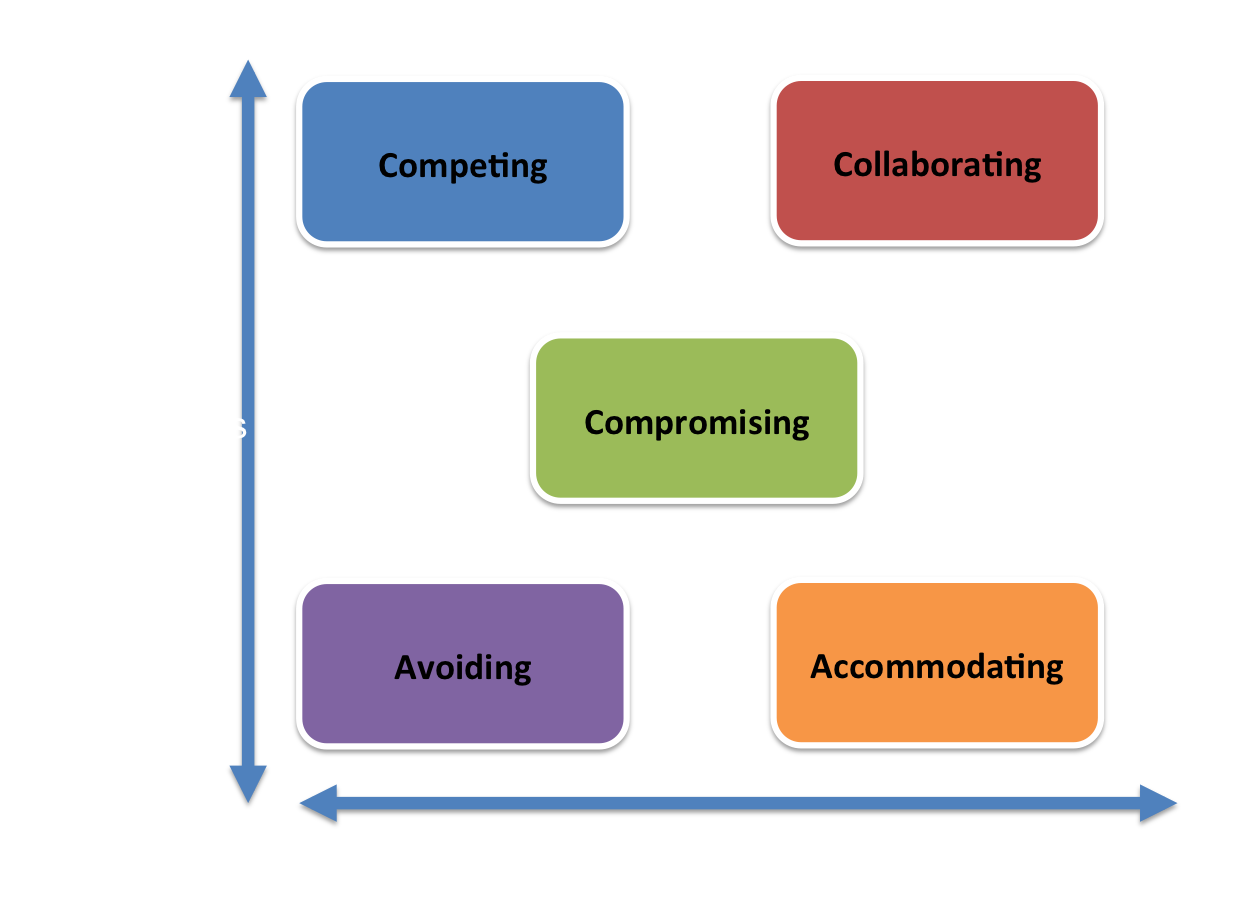
[STRIKEOUT:** TKI Framework for Communication Style**]
(Thomas Killmann Conflict Instrument, (Mountain View: Consulting Psychologists Press, 1974)
It must have been ten years since I saw this chart last time in GE's FMP training (Financial Management Training Program). This chart is useful for large corporations (and I think for scientific/academic research too) where the concept of teamwork and collaboration exists. However it falls short in explaining the complexities or the dynamics of managing external relationship or the startup world. Since none of my real-life situations can be captured in the TKI Framework, I had to develop the following chart myself:
HKY Framework For Communication Style
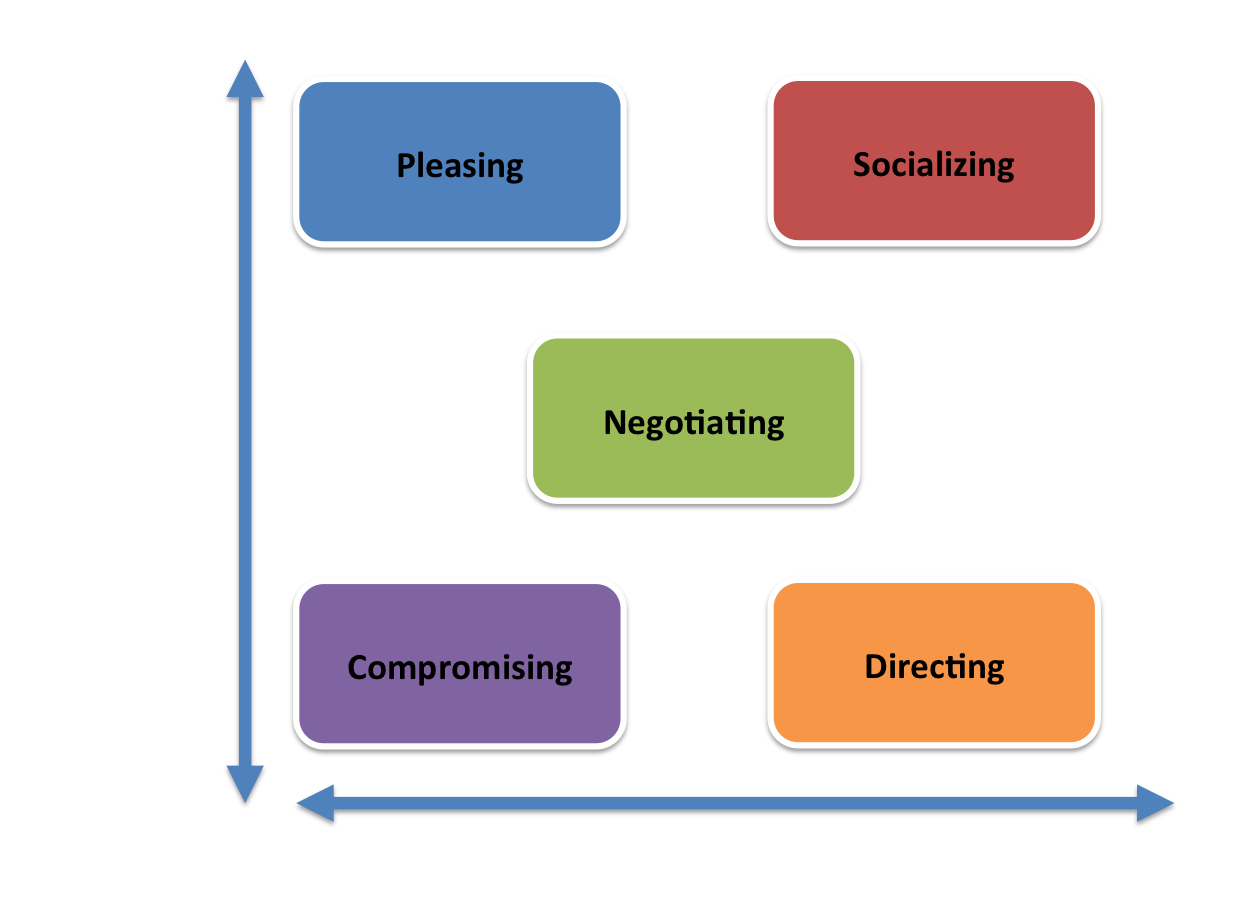
- Directing: when I work with my subordinates, I have high level of authority and I'm result-oriented, so I give orders most of the time.
- Compromising: when I work with the other co-founders of my company, we all have considerable influence over each other as major shareholders. My level of authority is relatively-speaking low in this context and I'm still result-oriented (to maximize we shareholders' value), so I compromise on most of the issues to strike the balance within the group/partnership.
- Negotiating: when I negotiate contracts/projects with other companies/organizations, my level of authority can be anywhere in the middle - I can never exert absolute power over my counterparts but I might have more chips than they do; my goal is two-faced as well, I want to close the deal (result-oriented) but I don't want to hurt the relationship either and sometime relationship is even more important than cutting a deal per se.
- Pleasing: when I work with my board of directors/CEO, my level of authority is low, and I value relationship more than result because a lot of the interactions with those larger-than-life personalities don't lead to any specific business action, but they help build the perception/image of me in their minds. Basically I'm trying to please them in whichever way I can.
- Socializing: when I work with my suppliers (lawyers/accountants/bankers), I have high level of authority (because I'm their client, at least a potential one) and I have every incentive to transform those platform-specific relationships into my personal relationships. A lot of times, we are just talking and chilling out together. In other words, we're socializing.(it moves downward to negotiating when we're trying to sign a service contract, and further downward to directing when we're doing projects together)
Perception Is Reality
- Unfortunately, this is true in every sense. People's behavior, attitude and judgement on us are based on the perceived image of us in their minds. So when we're talking about living in an interactive environment, whether being social or business, the perception people have on us is really the one that matters. In 2006-2007 during my last days in GE I thought about building a website that can capture friends' perception on you on the basis of anonymity and reciprocity (a more trendy phrase is social graph). I didn't try hard enough with that idea because I couldn't appreciate the power of Haskell and didn't know a kid in Harvard was applying similar idea to ranking the hotness of girls on campus.
Giving Feedback Is A Gift
- I can't recall many situations where people are thrilled by the 360 feedback they receive, and I've done a lot of 360 reviews in GE. Usually you already know the glowing reviews people have for you (unless you live in a vacuum cage like Magneto), way before those comments get into formal 360 process. So, be definition, most of the "surprises" coming out of 360 reviews are not the ones you'd expect, and to a much lesser extend, enjoy.
- Putting aside our general dislike of those 360 review surprise comments, someone's action of giving feedback to you is ALWAYS a gift, because he/she doesn't have to do that (he/she could have just given you a middle score with no comment to stay under the radar screen) and by doing this (giving feedback) he/she is running the risk of severing his/her relationship with you (because there is a pretty good chance that you can guess the source of the comment). It takes some courage to give feedback to someone you know (assuming people do that in a responsible fashion).
- Therefore the first thing you should do after receiving feedback is to thank that person. You may not be friends any more but you should still thank him/her.
The Most Useful Feedback Is The One That You Never Receive
- The value of feedback varies from mild surprise to touchy-feely to totally useless. The most useful feedback is nonetheless the one you will NEVER receive, such as, we like you a lot, but you're just not smart enough for this job; you smell badly; you're competent, but a total jerk, and no one in the office likes you; you just look too young for this executive position; you are our best employee, but you have zero charisma and nobody respects you. Everybody knows this is the one and only feedback we want to give to that person in the team, but nobody dares to say it out loud.
- I had the pleasure of doing something to the above effect once to one of the co-founders of our start-up company in Beijing. It is the most difficult conversation I've ever had.
- That's why sometimes your enemy from the other side of the fence can actually help you the most because he/she might just deliver the most valuable feedback to you , not your consensus-building colleagues from the same department or the same company.
Beauty Pageant Winner Does NOT Win Every Contest
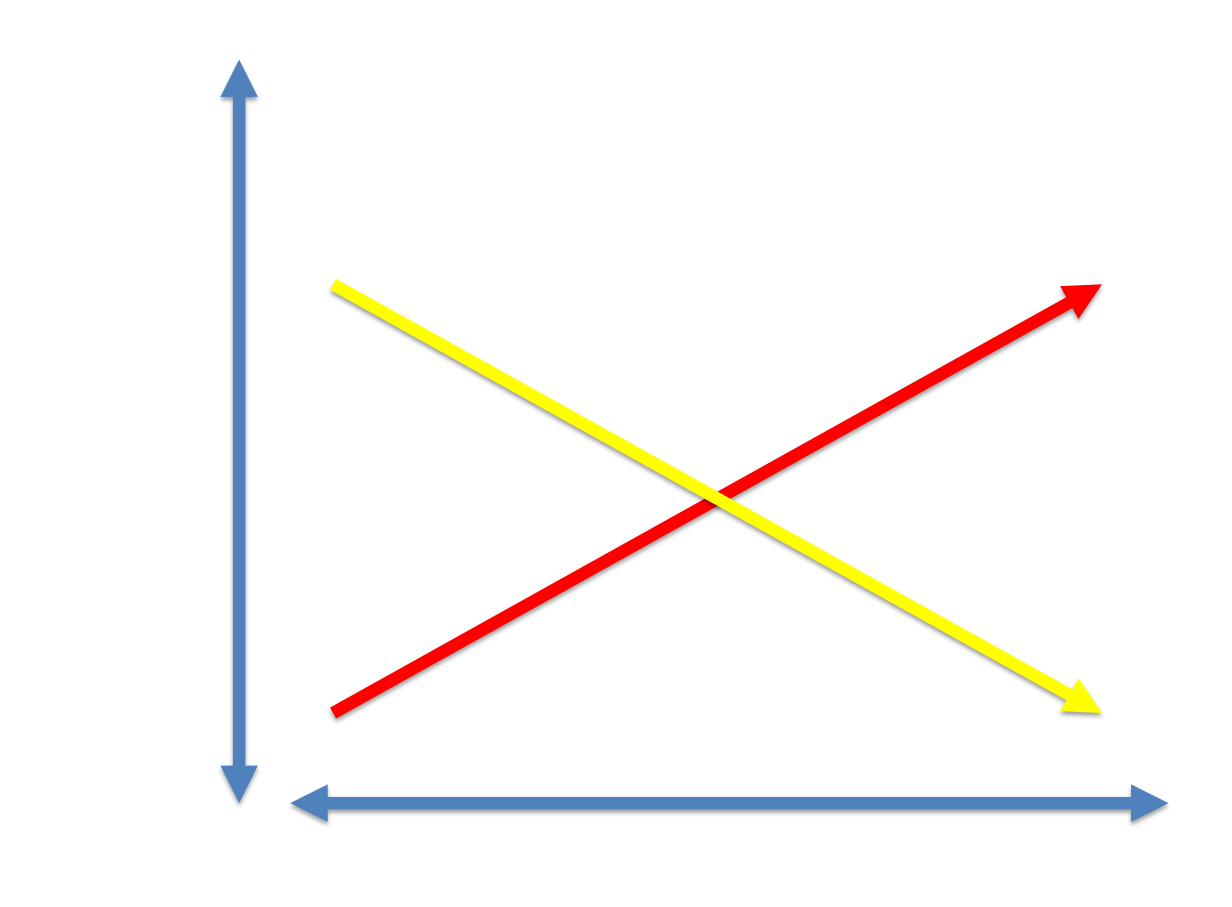
- Beauty pageant winners don't win all the contests in real-life. In fact, I can only think of one situation: voters-elected government legislator/official such as Senator/Congressman/President. Getting ahead in corporate ladder or in business in general takes much more than just winning the popularity vote.
- Being popular and liked by many is useful for JUNIOR employees in the company because they're vulnerable to too many people with more seniority. As one ascends the corporate hierarchy, delivering desired result becomes increasingly more important than being the best friend for the majority. At CEO level, the measurement of success is simple: maximize shareholders' value. Popularity is seldom a consideration at that level.
Chinese Culture and Giving Feedback
- Giving feedback in Chinese culture is especially difficult because Chinese value face way more than anything else. One thing I really like about American culture (at least from TV/movie) is that friends can beat the shit out of each other over certain things but after that friends can still be friends (let me know if Hollywood aggrandizes this as I'm a hopeless junkie in this area). With Chinese, you just can never do that. So if a Chinese asks feedback from you, be afraid, be very afraid.
Really Bad Feedback That Nobody Wants To Hear
- you're so smart (everybody is smart here, so being smart is like nothing)
- your critical-thinking is great (so.. you can't execute or do operation)
- you're such a nice guy (you got no memorable personality)
- Something related to this, I wrote about in 2005-2006