Phil Libin Talk (CEO of Evernote)
I've been a die-hard user of Evernote for the past two years. To me this is one of the two best cloud-computing applications out there, with the other one being dropbox.
Confession of a Stanford Sloan Fellow Series EP08
I've been a die-hard user of Evernote for the past two years. To me this is one of the two best cloud-computing applications out there, with the other one being dropbox. Evernote's mission is to become the ultimate depository of human knowledge - I don't know if that's a stated mission by Evernote themselves but at least that's how I think the team is trying to do (similar to Google's "index human knowledge"). Evernote has amassed 40 million users and just raised $1 billion recently. It's low-profiled and very under-rated, but definitely another Silicon Valley legend in the making. Notes-taking software has been an integral part of every operating system since the early days of computers. People in the past just take it for granted when it comes to notes-taking software. It's remarkable that Phil Libin's team was able to spot the huge untapped consumer needs in this area and create something beautifully simple and useful. It first attracted me by enabling me to achieve perfect sync across all my devices, which included an iMac, a Thinkpad, an android Motorola Milestone, an iPhone, and an iPad. It is at the same time as simple as hao123. Once it is there, it cannot be replaced because no competitor can get any simpler than this.
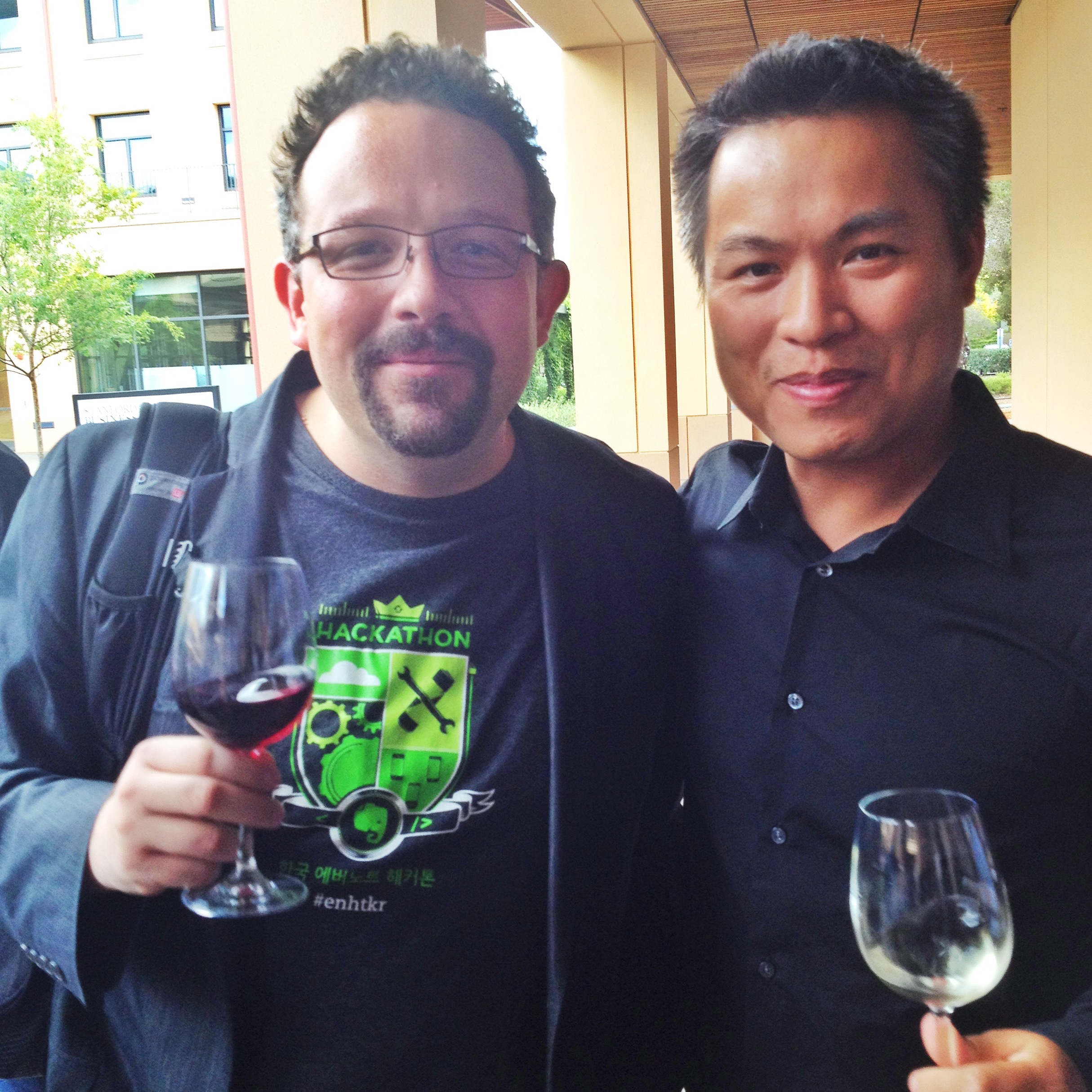
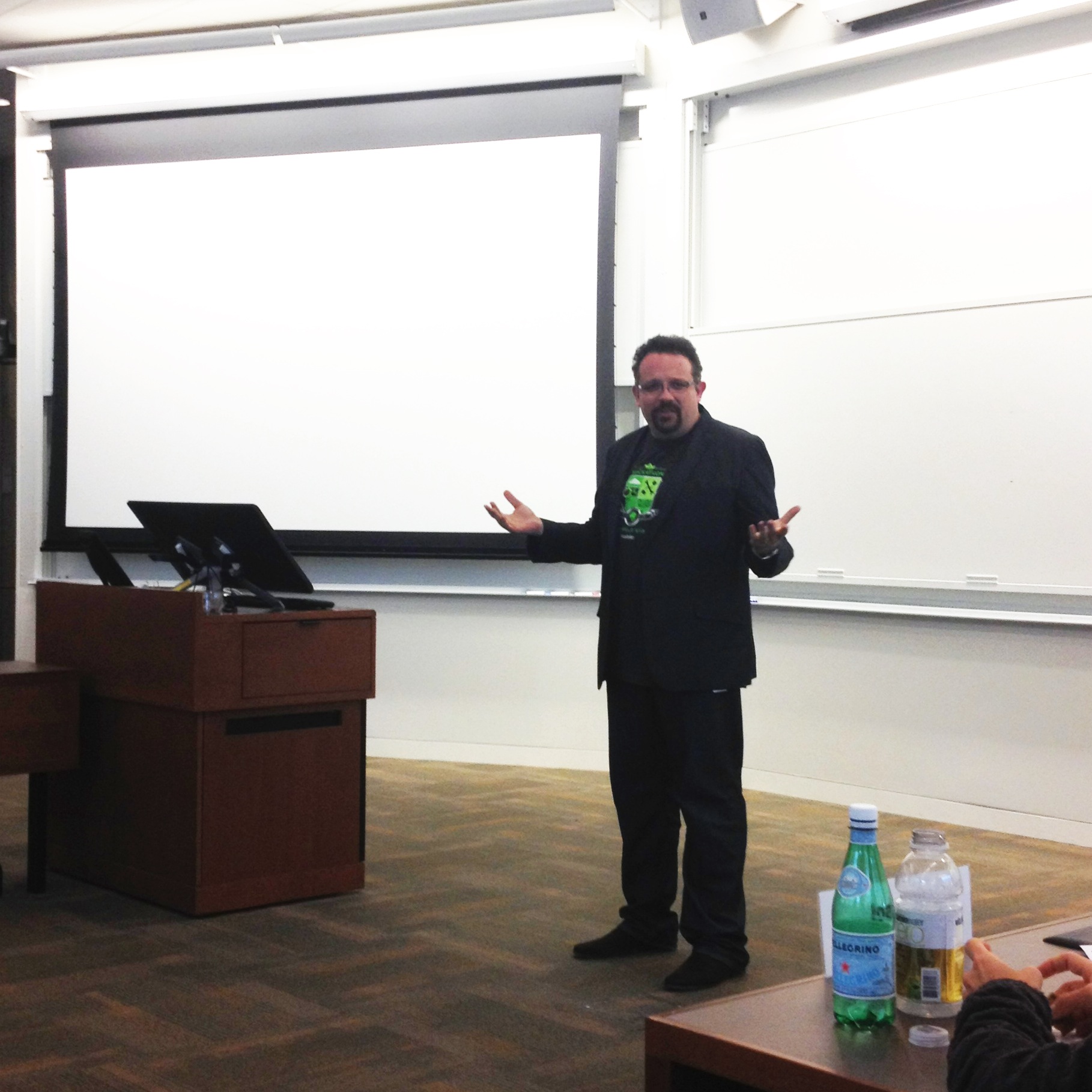
Thanks to our class president Michael's connection to the Russian mafia in Silicon Valley, Evernote's founder and CEO Phil Libin came to our Stanford Sloan Class of 2013 to give us a talk and chatted with us for a while. Below is a recap:
- This is the best time in history to do consumer technology entrepreneurial project
- With the rise of App Store, products can reach to millions of users very quickly
- Entrepreneurs can focus on creating the best products only, and don't have to worry about marketing or advertisement
- Social media spreads the words quickly for good products
- Entrepreneurs don't have to worry too much about infrastructure either as industrial solutions there have been fairly mature and easily available
- If you have a great product, it's impossible not to let people know about it
- The best product enjoys enormous leverage, while the middle-class product still face stiff competition and challenge to reach out to users
- Evernote's success (2008-2012) is the result of a streak of extremely low-probability events. At one time Phil received an email at 3am right before he was going to bed from a stranger in Sweden, who subsequently provided the much needed capital to sustain the company for another six months. Had Phil gone to bed 10 minutes earlier, he would not have seen that email and he would have fired the team and closed down the company the next morning (he was ready to do that as the company was running out of cash). Phil got an insider's tip about App Store's launch eight days before the launch. The team worked on version 1.0 for eight days with no sleep and caught on the App Store bandwagon.
- Make the product you use, make the product you love. If this product/company is the one you love, make it your first company, don't make it your third. (Evernote was Phil's third startup project).Make something for yourself. Make something you can use. If you don't like it or don't want to use it, nobody will.
- HTML 5 vs Native. Native is the way to go in the short-term. HTML 5 is the lowest common denominator across all the platforms, so it has the smallest development costs but it's never as good as native applications. Right now the difference in the hardware on various platforms (iOS, Android, Windows Mobile) is still relatively small so the benefit of reduction in application development costs is not sufficient to make up for the degraded user experience on HTML 5. In the future this trend might reverse (when the difference in the hardware across platforms is so significant that the benefit of reduction in development costs outweighs the enhanced user experience/product quality from native applications).
- Evernote is like Nike. Nike appears to athletic people who want to live health and Nike is doing everything to target and appear to this group of people. Evernote wants to reduce stupidity in the world by providing the best tool to people who want to pursue knowledge. Under that grand scheme, there is no boundary on what Evernote can or cannot do (software, hardware, service...).
- To acquire new users is easy - just make truly great product. Evernote's approach is entirely organic and basically let the product speak for itself. The role of marketing department is not to acquire new users, but rather it should be to educate existing users, armor existing users with sufficient knowledge, bonding existing users in community events so that existing users become the best advocate and ambassador for the product.
- Phil doesn't want to sell the company ever, and he's made it very clear to all the investors in the very beginning. He wants to build Evernote into a 100-year company. The company raised $1 billion just so that it won't worry about cash ever. Phil never chases valuation. He chooses to chase investors instead who share his same passion and vision (who has to be an Evernote user also).
- The significance of $250 million valuation price tag - this is the smallest number that can bring "billion" into a conversation (a quarter billion)
- How to attract talents? Promise to them they will be part of something that will have a positive impact on people's lives. This is the single biggest motivation for Evernote employees. It's not money nor title.
- Phil doesn't care about competitionat all. He's been involved in about ten companies. For those early ones he joined, there was always this tendency to benchmark yourself against an enemy and play chess moves with them. Phil felt in the end none of those enemies made a difference to the main story. Technically all the current big platform companies (Apple, Google, Facebook, Microsoft) have competing products, but Phil doesn't feel thinking about them is helpful.
- The next big innovation in consumer technology will more likely come from high-population-density countries such as China, Korea or Japan. Silicon Valley's consumer technologies carry distinctive American flavor, while in Asia most mega cities are very vertical. American model might not work well in those cities.
- If this is your first company, it is indeed not easy to stay focused and commit all your energy into one single project. For Phil and his partners, Evernote is the third and the last company they ever want to work for. This is their life project so focus will no longer be an issue for them.
- Incorporate a commercial version of your freemium software from the very beginningand try to monetarize that. Evernote's premium version was there in the beginning, even though the majority of Evernote users only use the free version. The commercial stream doesn't need to be huge (that will scare away users), but it needs to be there to establish a consistent tracking record and growth history to later demonstrate to investors the trajectory of potential profit stream and that this thing can make money.